The left brain-right brain theory began with the work of 1981 Nobel Prize winner Roger W. Sperry. Generally speaking, the left side of the brain tends to control many aspects of language, logic, learning and information processing. People who are left brain dominant tend to be more analytical in their thinking and typically perform well academically.
 When a person is Right Brain Dominant, they are thought of as dreamers, artists, and musicians since the right side of the brain tends to handle spatial information and visual comprehension. People characterized as being right-brained prefer visual instructions with examples, can memorize music more easily, are more spontaneous and tend to solve problems more intuitively.
Left brained people are often considered smart, because modern education is generally geared toward their strengths such as memorizing information and logic. But this does not actually make them “smarter” it simply allows them to succeed academically easier than their right brained counterparts. They are however able to use their abilities to solve complex problems and these strengths make certain jobs perfect for the left-brained individual. Here are six, high-paying jobs, which would probably suit a left-brained person. [Read more…] about 6 Great Jobs for Left-Brained People
 When choosing a career, it is important that you consider both your interests and strengths. Certain careers are better suited toward people that are naturally
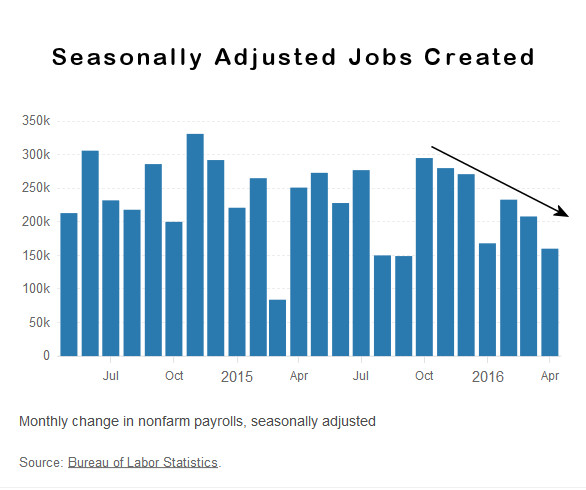 On a seasonally adjusted basis employment has fallen while on a non-adjusted basis the actual number of non-farm employed has increased from 142.887 Million to 143.944 million for a net increase of 1,057,000 jobs but since April traditionally sees a large increase in seasonal workers the seasonally adjusted number says that we were only 160,000 jobs better than what we would expect if there were zero jobs growth.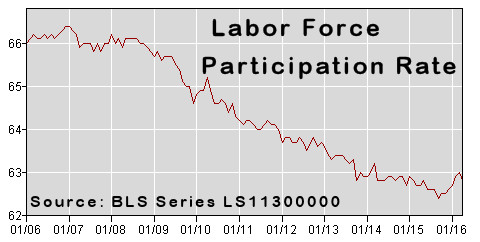

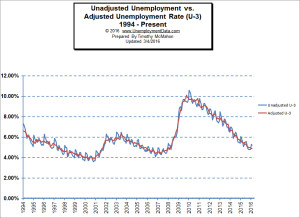


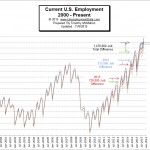 According to the current Bureau of Labor Statistics data, the employment situation for the month of October 2015 was as follows: The number of Unadjusted jobs reported for October 2015 was 143.739 million. That was up from June’s previous peak of 142.836 million.
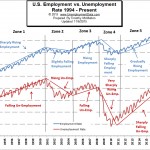 When looking at employment vs. unemployment you would think that they would simply be the inverse of each other. Flip one over and you have the other. But the U.S. Bureau of Labor Statistics (BLS) actually uses two entirely different surveys to calculate them. So by comparing them we can spot irregularities. See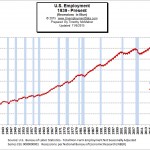
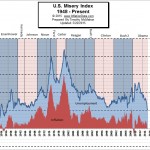 The misery index combines two factors that can make life difficult for people i.e. unemployment and inflation. High levels of price inflation (rapidly rising prices) will cause households to have difficulty affording the basic necessities while high unemployment will leave a high percentage of households without any income at all.