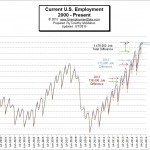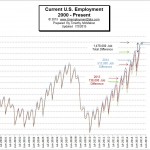
Back in February of 2016 Fortune magazine published an article entitled “The U.S. Economy Is Finally at Full Employment” and then in May CNN-Money published an article entitled The U.S. is ‘basically at full employment’ quoting San Francisco Federal Reserve President John Williams as saying “We’re basically at full employment…that’s very good news.”
“We’re basically at full employment…that’s very good news.” San Francisco Federal Reserve President John Williams
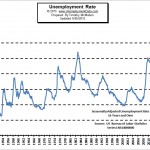
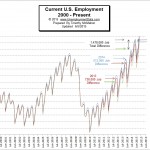
So what is “Full-Employment” and are we really there? At first glance you might think that full employment should equal 0% and with the current unemployment rate hovering around 4.7% we obviously aren’t there. But Full employment, in macroeconomics, is defined by many economists as being an acceptable level of unemployment somewhere above 0%.
Even when employers are having difficulty finding employees some people are [Read more…] about Is the U.S. Really at “Full Employment”?
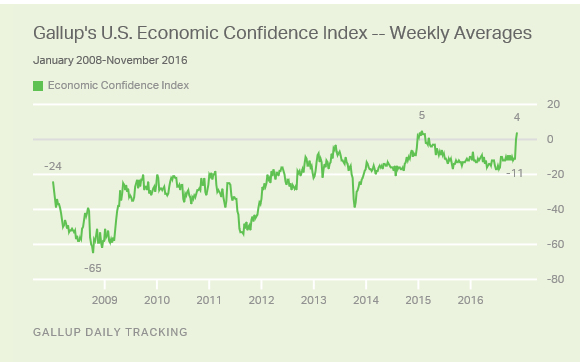
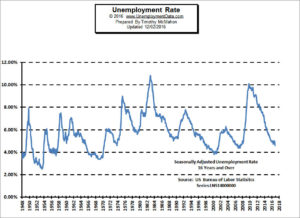
 While people often view mothers who stay home with their children in a positive way, they may look down on stay at home dads.
 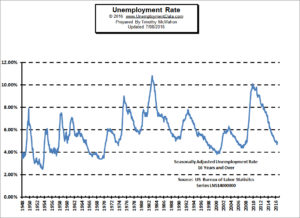 On Friday July 8th, the U.S. Bureau of Labor Statistics (BLS) released their newest unemployment data for June 2016. According to the BLS, the current “Seasonally Adjusted” Unemployment Rate is 4.9% up from 4.7% for May. The current “Unadjusted” rate is 5.1% up from 4.5% in May.
 The BLS issued their “preliminary estimates” for the employment situation for the month of August 2015. The Commissioner’s report regarding the Seasonally Adjusted numbers says, “Nonfarm payroll employment increased by 173,000 in August, and the unemployment rate edged down to 5.1 percent. Employment rose in health care and social assistance and in financial activities, while manufacturing and mining employment declined.”
 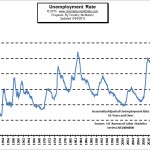 The U.S. Bureau of Labor Statistics (BLS) also released the newest unemployment data for August 2015 today. According to the BLS, the current “Seasonally Adjusted” Unemployment Rate for
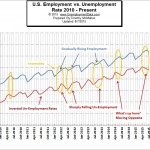
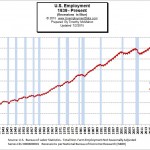
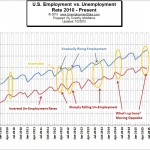
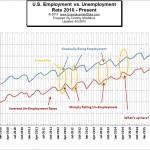
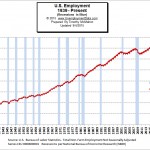
 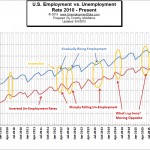 In our chart of employment vs. unemployment we compare them and although you would expect that employment and unemployment are simply the inverse of each other (i.e flip one over and you have the other) actually there are several anomalies in the data. Because the U.S. Bureau of Labor Statistics (BLS) uses two separate surveys to calculate the data it helps us see