 January Unemployment is almost record setting… but not for the reason you might think.
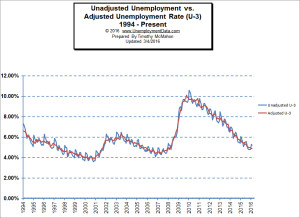
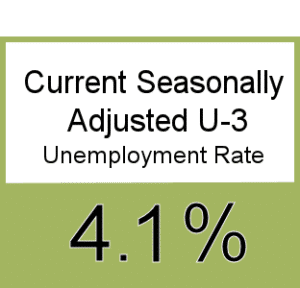
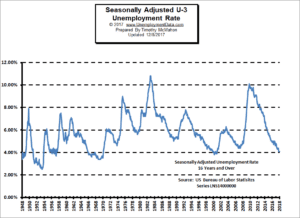
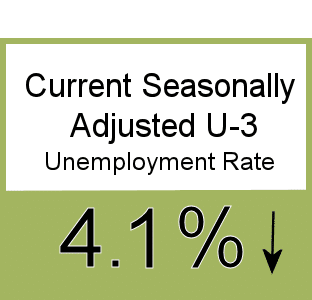
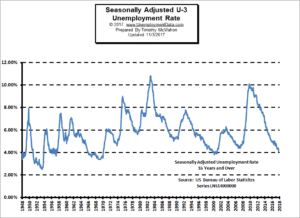
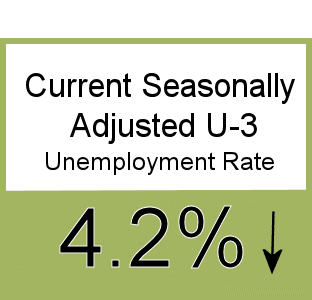
On Friday February 2nd the U.S. Bureau of Labor Statistics (BLS) released their monthly employment survey results for the month of January. According to the BLS the Seasonally Adjusted U-3 Unemployment Rate for January is unchanged for the almost record setting 4th month in a row. That’s right from October through January the Seasonally Adjusted Unemployment rate has been 4.1%. This is a very low level and we really don’t expect it to get too much lower but the interesting part is that the unadjusted U-3 was 3.9% from October through December (resulting in the adjusted rate being 4.1%) but then in January the unadjusted rate jumped to 4.5% (a 0.6% increase) and the adjusted U-3 remained the same at 4.1%. This is because typically January sees an uptick in unemployment as all the seasonal employees get laid-off. So we would expect some sort of uptick in unadjusted unemployment rate. But because the Seasonally Adjusted U3 was unchanged for the month the current increase in the unadjusted U-3 was actually no greater or less than normal. See Current Unemployment Chart for more info.
U-6 Unemployment
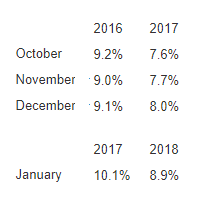 Over the same period, Unadjusted U-6 unemployment which is a broader measure of Unemployment including discouraged workers, climbed steadily.
It was 7.6% in October, then 7.7% in November, then 8.0% in December, and finally 8.9% in January.
This is still significantly better than a year ago when in November 2016 Unadjusted U-6 was 9% and had climbed to 10.1% by January 2017.
See Unadjusted U-6 unemployment for more info.
Employment
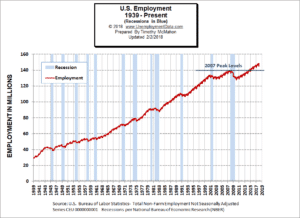 Over the last month, the actual number of people working (not seasonally adjusted) has decreased by [Read more…] about January Unemployment Almost “Record Setting”
 Typically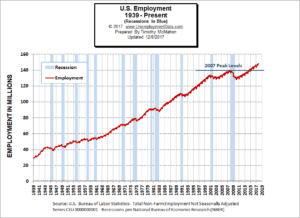
 On Friday October 6th the U.S. Bureau of Labor Statistics (BLS) released their monthly employment survey results for the month of September. Every month the BLS conducts two surveys one contacts a sampling of households and the other collects data from businesses. Then they massage some of the numbers to “Seasonally Adjust” them and release them to the media.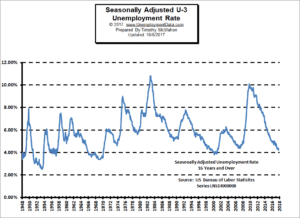
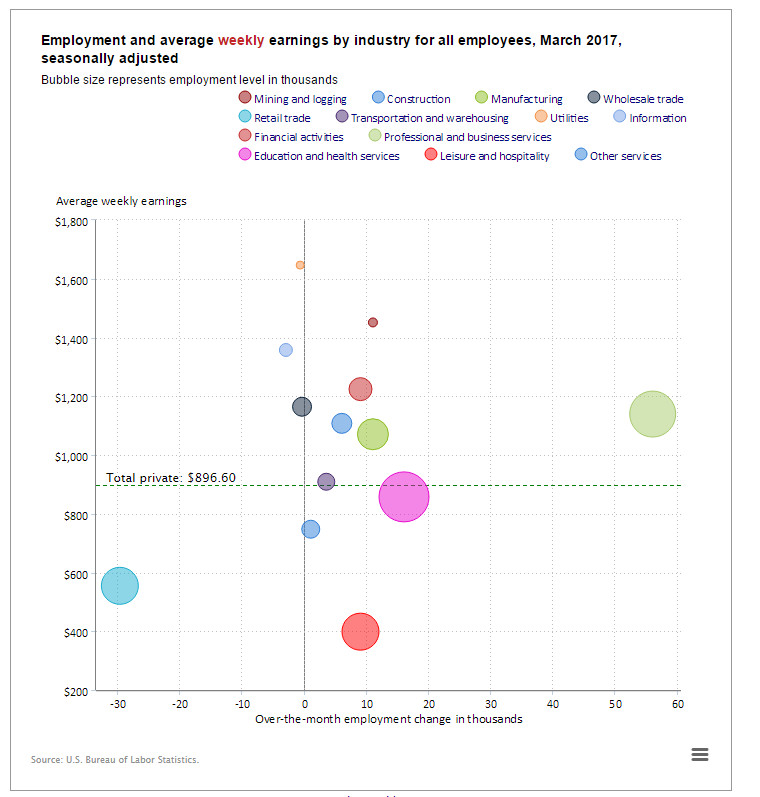
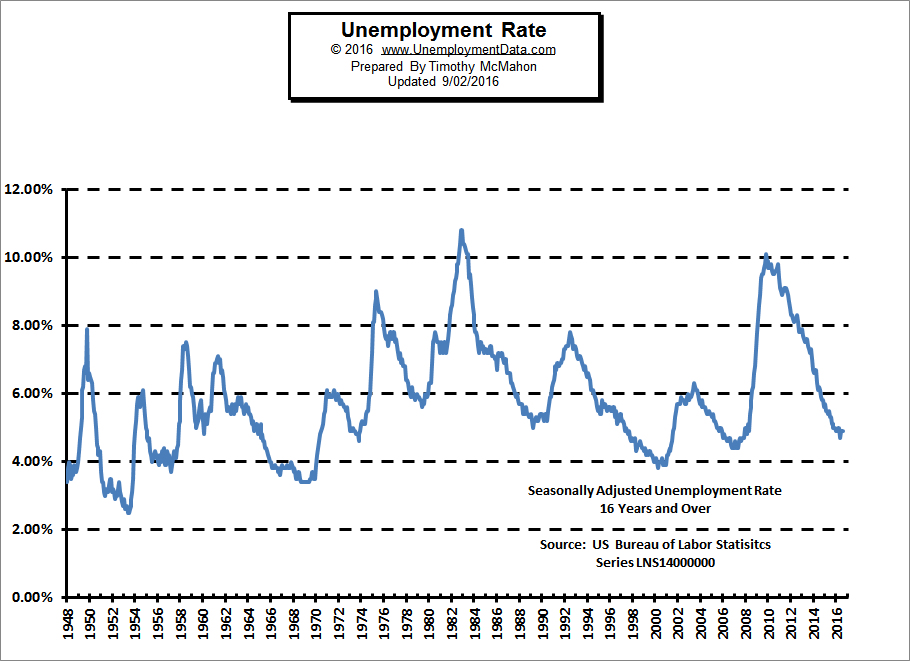 “Nonfarm payroll employment increased by [seasonally adjusted~ editor] 151,000 in August, and the unemployment rate remained at 4.9 percent. Employment continued to trend up in several service-providing industries. Incorporating revisions for June and July, which reduced nonfarm payroll employment by 1,000 on net, monthly job gains have averaged 232,000 over the past 3 months. In the 12 months prior to August, employment growth averaged 204,000 per month. Employment in food services and drinking places continued to trend up in August (+34,000). Over the year, the industry has added 312,000 jobs… Mining employment continued on a