 While people often view mothers who stay home with their children in a positive way, they may look down on stay at home dads. When you lose your job, it can take months until you find another one. This can be stressful and financially difficult for unemployed dads.
Unemployment is stressful and depressing, between applying for jobs, searching for positions online, going through phone interviews and meeting with HR directors, in addition to finding ways to pay your bills and cover your financial responsibilities, you need to plan for future financial emergencies. The one upside you might look forward to spending some time at home with your kids.
Unemployed Dads Work from Home
There are thousands of jobs that you can do from home. U-Haul, 1-800-Flowers and other companies hire workers to answer phone calls and take orders from home. With the growing virtual employment sector at sites like freelancer say that you can browse over 600 categories of jobs including programming, web development, design, writing, data entry & more. While some of these jobs can pay well over $10 an hour, keep in mind that you’re usually responsible for paying your own taxes based off how much you make. You could also start your own business doing landscaping, babysitting or even pet walking from home.
Unemployed Dads Should Be Prepared
Experts like Family Financial Partners, tell us that [Read more…] about Financial Solutions for Unemployed Dads
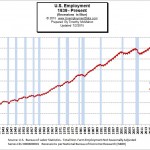
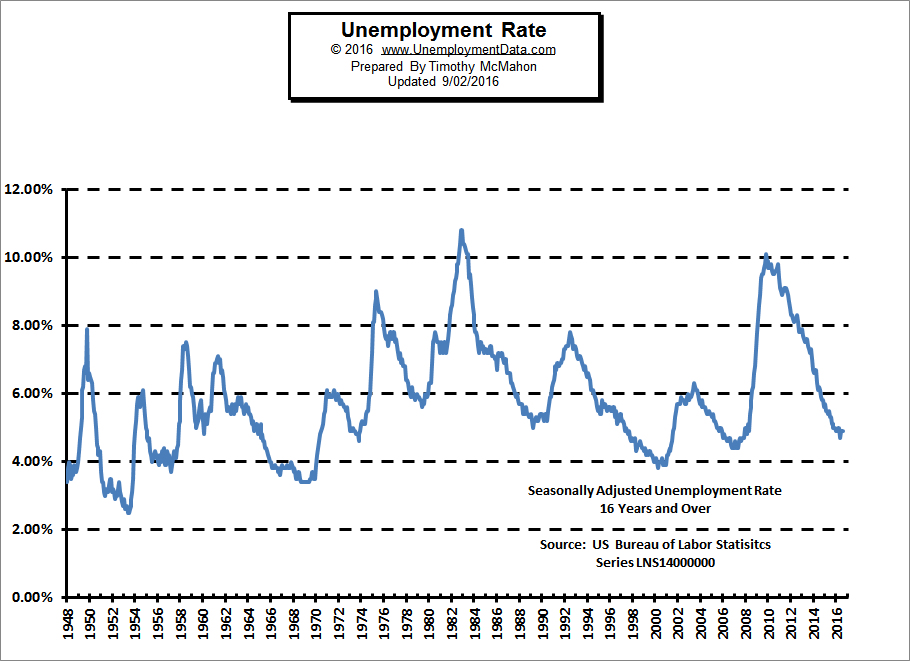 “Nonfarm payroll employment increased by [seasonally adjusted~ editor] 151,000 in August, and the unemployment rate remained at 4.9 percent. Employment continued to trend up in several service-providing industries. Incorporating revisions for June and July, which reduced nonfarm payroll employment by 1,000 on net, monthly job gains have averaged 232,000 over the past 3 months. In the 12 months prior to August, employment growth averaged 204,000 per month. Employment in food services and drinking places continued to trend up in August (+34,000). Over the year, the industry has added 312,000 jobs… Mining employment continued on a
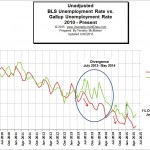
 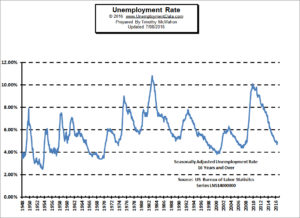 On Friday July 8th, the U.S. Bureau of Labor Statistics (BLS) released their newest unemployment data for June 2016. According to the BLS, the current “Seasonally Adjusted” Unemployment Rate is 4.9% up from 4.7% for May. The current “Unadjusted” rate is 5.1% up from 4.5% in May.
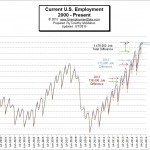
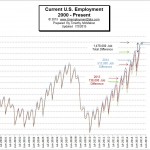
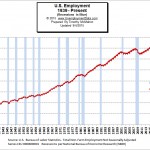
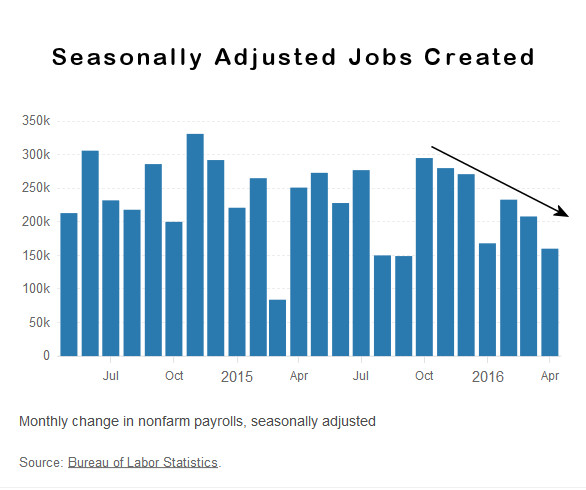 On a seasonally adjusted basis employment has fallen while on a non-adjusted basis the actual number of non-farm employed has increased from 142.887 Million to 143.944 million for a net increase of 1,057,000 jobs but since April traditionally sees a large increase in seasonal workers the seasonally adjusted number says that we were only 160,000 jobs better than what we would expect if there were zero jobs growth.

 According to the current Bureau of Labor Statistics data, the employment situation for the month of October 2015 was as follows: The number of Unadjusted jobs reported for October 2015 was 143.739 million. That was up from June’s previous peak of 142.836 million.
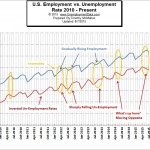
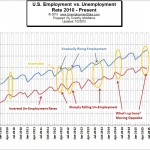
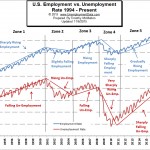 When looking at employment vs. unemployment you would think that they would simply be the inverse of each other. Flip one over and you have the other. But the U.S. Bureau of Labor Statistics (BLS) actually uses two entirely different surveys to calculate them. So by comparing them we can spot irregularities. See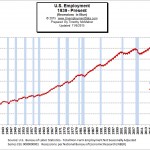
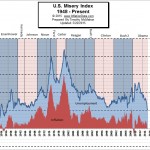 The misery index combines two factors that can make life difficult for people i.e. unemployment and inflation. High levels of price inflation (rapidly rising prices) will cause households to have difficulty affording the basic necessities while high unemployment will leave a high percentage of households without any income at all.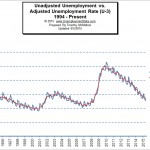
 September Employment Numbers Disappointing
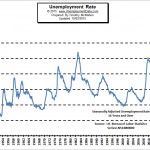 The U.S. Bureau of Labor Statistics (BLS) also released the newest unemployment data for September 2015 today. According to the BLS, the current “Seasonally Adjusted” Unemployment Rate for September is 5.1% identical to August. The BLS reported the “Unadjusted” Unemployment Rate is 4.9% which is lower than August’s 5.2% . See
 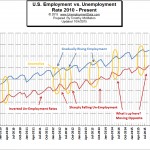 In our chart of employment vs. unemployment we compare them and although you would expect that employment and unemployment are simply the inverse of each other (i.e flip one over and you have the other) actually there are several anomalies in the data. Because the U.S. Bureau of Labor Statistics (BLS) uses two separate surveys to calculate the data it helps us see
 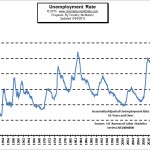 The U.S. Bureau of Labor Statistics (BLS) also released the newest unemployment data for August 2015 today. According to the BLS, the current “Seasonally Adjusted” Unemployment Rate for
 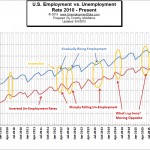 In our chart of employment vs. unemployment we compare them and although you would expect that employment and unemployment are simply the inverse of each other (i.e flip one over and you have the other) actually there are several anomalies in the data. Because the U.S. Bureau of Labor Statistics (BLS) uses two separate surveys to calculate the data it helps us see