
The U.S. Bureau of Labor Statistics (BLS) released its April
employment / unemployment report on May 8th, 2026.
Employment / Unemployment
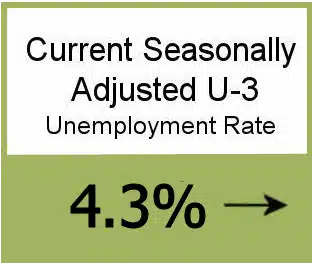
- Seasonally Adjusted U-3 is 4.3% Unchanged
- Unadjusted U-3 is 4.0% down from 4.3%
- Unadjusted U-6 is 7.7% down from 8.0%
- Labor Force Participation is 61.8% down from 61.9%
- Unadjusted Employment rose from 157.769 million to 158.695 million
- Next Update: June 5th, 2026
Summary:
The jobs report came in higher than expected, with only a minor adjustment downward for the previous month’s numbers (March). The biggest gainer was Education and Health, gaining 46,000 jobs. The biggest loser was Information, with a loss of -13,000 jobs, and with only three sectors declining.
According to the Commissioner of the U.S. Bureau of Labor Statistics:
“Total nonfarm payroll employment edged up by 115,000 in April, and the unemployment rate was unchanged at 4.3 percent, the U.S. Bureau of Labor Statistics reported today. Job gains occurred in health care, transportation and warehousing, and retail trade… Federal government employment continued to decline in April (-9,000). Since reaching a peak in October 2024, federal government employment is down by 348,000, or 11.5 percent”.
So, despite declines in Government employment, overall employment still increased.
As usual, they are talking about “Seasonally Adjusted Jobs”.
Looking at the Unadjusted Establishment Survey report we see…
Originally, the BLS reported employment of 157.775 million for March, which they have now adjusted to 157.769 million. Current April numbers are 158.695 million for an increase of 926,000 jobs based on their current numbers or +920,000 based on the original numbers.
Note: According to Politifact, “The federal workforce grew by about 4.8% during Biden’s term, increasing from 2.89 million in January 2021 to 3.02 million in January 2025.”
So, Trump has reduced the federal payroll by more than twice what it gained under Biden. Although this does reduce budget pressure, it also puts pressure on the job market for those who are seeking other employment. It is estimated that between 30-40% of these workers retired, while perhaps 10-15% were working spouses who chose to stay home rather than seek other employment.