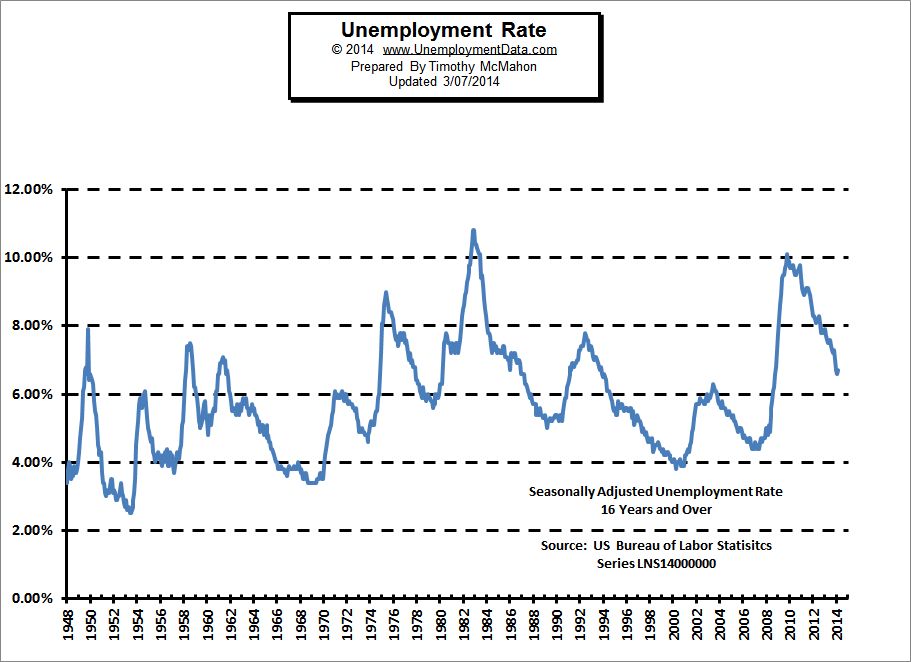
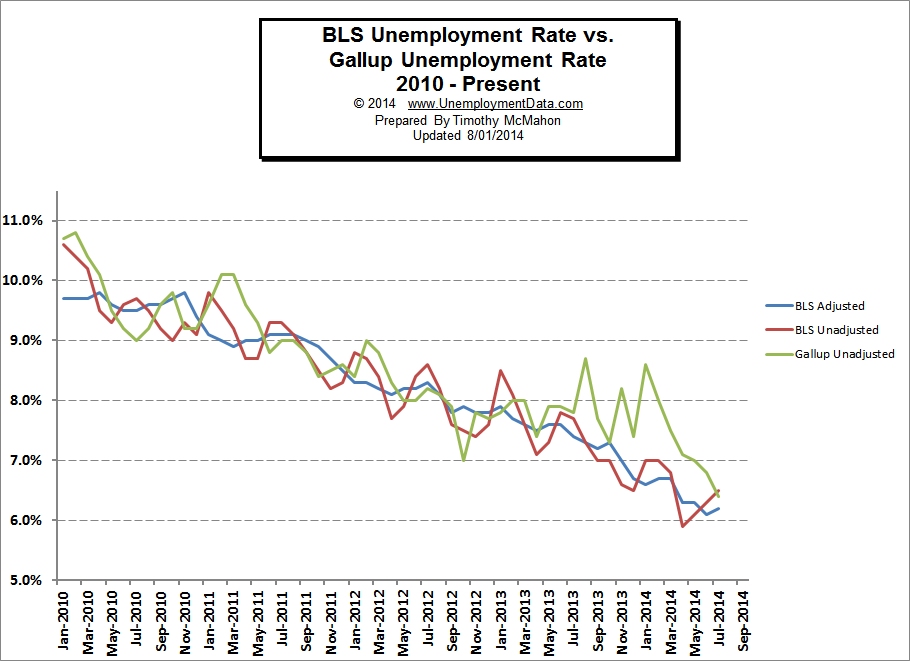
The U.S. Bureau of Labor Statistics (BLS) released the August Unemployment figures on September 5th. The Seasonally Adjusted Unemployment Rate was 6.2% up from 6.1% in June. The Unadjusted Unemployment rate was also down from 6.5% in July to 6.3% in August.
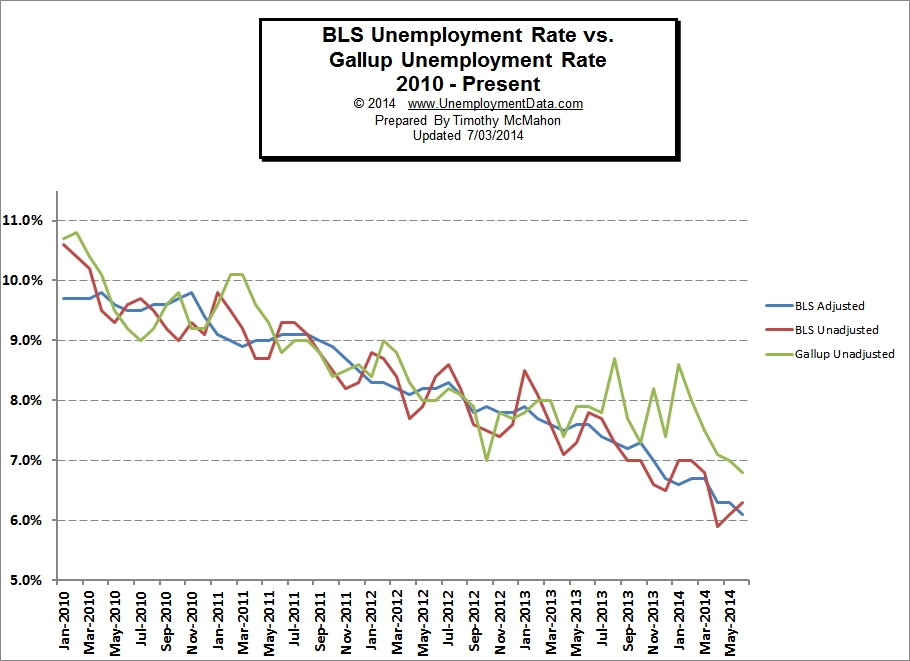
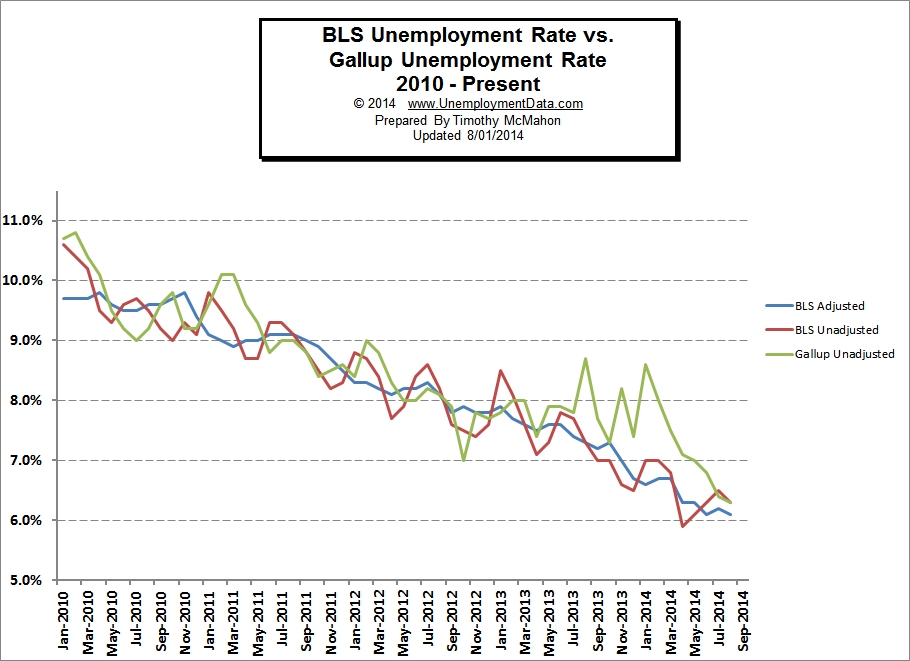 In another rare occurrence, the BLS seasonally adjusted numbers are actually identical to the Gallup numbers for the first time since September 2011. In the interim the BLS has been lower than the Gallup numbers 24 times and Gallup has been lower 9 times. The average difference when the BLS is lower is 0.6% but when Gallup is lower the average has only been 0.3%. So in addition to BLS being lower more often it is also lower by more indicating some sort of bias to the downside. But perhaps the BLS is mending their ways since last month and this month have resulted in the BLS and Gallup being well within a normal margin of error. [Read more…] about BLS Releases August Unemployment: 6.1% Down from 6.2% in July
 Source