
If you’ve never had to apply for government assistance such as welfare, food stamps, disability, or unemployment benefits, the world of federal aid might be very foreign to you. But in reality, about half the population of the United States lives in a household where at least one person gets some form of government aid. Many of these people are seniors, veterans, and the very poor, and the number has been on the rise ever since the economic meltdown of 2008. With all the questions in the news about who is abusing the system, you might start to wonder what the government is doing to prevent that abuse. Much of the responsibility falls to trained eligibility workers, who conduct interviews and investigations to see who should get help and how much. It’s not your average government job, but for many people, it’s a fascinating and important area to work in.
1. Screening Applicants
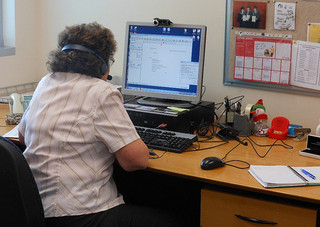 When someone applies for welfare or food stamps, they typically have a preliminary interview with a case worker, usually the very same day. The eligibility worker needs to find out how many children are in an applicant’s household and their ages, what an applicants main source of income is, and how much of that income gets allotted to utility bills and rent every month. Usually, it’s just a matter of simple math to find out how much aid the applicant is eligible for, based on the state and county standards of how much they earn over the poverty level, minus their bills. The eligibility worker also takes into account medical bills and whether there are disabled people in the home that the applicant is caring for. There are a few obvious things that will greatly reduce or eliminate eligibility for benefits, such as a large savings account, another type of benefits already being received, or a criminal conviction. [Read more…] about Advocating for the System: What’s it Like to Be an Eligibility Worker?
 On the BLS roofing webpage,
  SEA programs address the fundamental challenge faced by jobless workers who can’t afford to lose their unemployment benefits simply because they aren’t actively looking for a new job. A White House blog entry from May of this year explained the inflexible system they faced before the new law:
 Perhaps one of the most exciting characteristics of a
  The media has depicted a crisis in the American manufacturing industry. Though the manufacturing industry has significantly shrunk in the U.S., no one can deny that the manufacturing business is still very strong. Manufacturing generates over 1.5 trillion dollars (more than 10 percent of the GDP) to the U.S. economy every year, and it employs over 17 million citizens. According to the United Nations Statistic Division, the U.S. produces more manufactured products than any other country in the world. The U.S. makes more than 20 percent of global manufactured products, compared to China’s 15 percent (second place) and Japan’s 12 percent (third place).



 Great, you have even brighter temp to permanent job prospects. It’s because you can get hands-on