
Critical Skills Beginning Welders Need to Master
The welding trades provide opportunities for more than 350,000 individuals in the United States alone. As of 2012, there were 357,400 welders, cutters, solderers, and brazers in the United States, making on average $17.45 an hour or $36,300 annually. The lowest 10 percent earned less than $24,720, and the top 10 percent earned more than $56,130. The primary job of a welder is to join pieces of metal with a weld. Such individuals are employed in the manufacturing, shipbuilding, and construction industries. A person with a high school diploma (or equivalency degree) and some additional training is qualified to become a welder.
Becoming a welder requires you to master certain critical skills necessary to be successful. Some of these critical skills include having an understanding of the different types of welds, mastering amperage and filler speed, and understanding how to choose the correct filler rods.
Understanding the Different Types of Welds
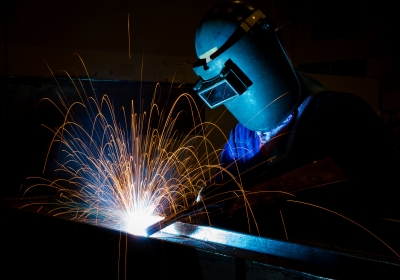 There are many different types of welds for different types of welding jobs. The most common types are arc, electroslag, flux-cored, gas metal-Arc, gas tungsten-arc, metal inert gas (MIG), plasma arc, shielded-metal arc, submerged arc, and tungsten inert gas (TIG) welding. Arc welding refers to the use of an electric current that is transmitted from a welding device to a surface that is being welded. The amp of arc welding first came into existence in 1802 and is the lowest costing welding process. An electroslag is used for angles, while flux-core welding is seen as an alternative to stick welding.
Welding processes in the automotive and manufacturing industry use gas metal or gas tungsten arc welding. Plasma arc and shielded-metal arc welding are also processes that are used in manufacturing. Working with stainless steel requires a mastery of the tungsten inert gas or TIG welding process. If you really want to get exotic you can learn [Read more…] about Is a Career as a Welder for You?
 Technical schools–also known as vocational schools, trade schools or career colleges–prepare students for specific jobs that they can pursue after graduation. Occupations taught at technical schools include electronics technician, automotive technician, welder, paralegal, licensed practical nurse,
  At the high end, healthcare jobs require extensive education, including an undergraduate degrees, as well as one to three years in professional school, residency, and internship requirements.
 While it is true that some manufacturing jobs are relatively easy, others are not so laid back. At the very least most manufacturing jobs require standing for hours on end, but it may also entail the constant lifting of heavy objects and long hours. This can compound the health problems that factory workers often experience, such as fatigue, exhaustion, and

 Always prepare properly, don’t just turn up on the day of the interview and expect that you will be able to answer everything without any preparation. Go online and research the company that you have an interview for and you will be prepared to answer various things on what the company does.
 A proactive candidate searches for local, national and (even) international opportunity; a number of owners are willing to (in the least) conduct video interviews searching for potential in-house or remote workers. It’s only a matter of time before an experienced and valuable candidate secures a video interview; here’s how to do it successfully.