

• About WordPress
    • WordPress.org
    • Documentation
    • Learn WordPress
    • Support
    • Feedback
  • Log In
  • Skip to primary navigation
  • Skip to main content
  • Skip to primary sidebar
  • Home
  • Contact us
  • Related Sites
    • InflationData.com
    • Financial Trend Forecaster
    • Your Family Finances
    • Elliott Wave University
    • Optio Money
  • About
    • Terms of Use
    • Disclaimer & Disclosure
    • Privacy Statement
  • Sitemap
    • 2009-2010 Posts
    • 2011 Posts

UnemploymentData.com

Your Source for Employment and Unemployment Data

Unemployment
  • Charts
    • Current Unemployment Rate Chart
    • Current Employment (Chart and Data)
    • Current Employment vs Unemployment Chart
    • Historical Employment Data
    • Employment Population Ratio
    • Misery Index
  • Unemployment
    • Historical Unemployment Rate Tables
    • What Is U-6 Unemployment?
    • Unadjusted vs. Seasonally Adjusted U-3 Unemployment Rate
    • BLS vs. Gallup Unemployment Numbers
    • Current U-6 Unemployment Rate
    • What is the Labor Force Participation Rate?
    • What is the Real Unemployment Rate?
  • Employment
    • Current Employment (Chart and Data)
    • Historical Employment Data
    • Contacting a Live Person at the State Employment Commission
      • How to Talk to a Live Person at the Virginia Unemployment Commission
      • Florida’s FLUID Unemployment Program
    • Benefits
      • Insurance
      • Retirement
    • Careers
    • Employment Costs
    • Experience
    • Government
    • Job Hunting
      • Interview
      • Resume
  • Find Articles
  • Education
    • Skills
  • General
    • Small Business
      • Outsourcing
    • Success
You are here: Home / Archives for Education

Education

Job Skills: Excel Spreadsheets

July 30, 2012 by Guest Contributor

Editor’s Note:

These days a critical job skill for Success in almost any position other than manual labor or minimum wage jobs is computer skills. Basic computer skills involves wordprocessing (like Microsoft Word®) or other Office Programs like MS Excel®, Powerpoint, etc.  In this article we are going to look at a skill that every job seeker should have and that is using Microsoft Excel®. After learning how to enter data into rows and columns one of the next things you will want to do is create a chart using Microsoft Excel®.

Steps By Step Guide To Create a Chart/Graph in MS Excel®
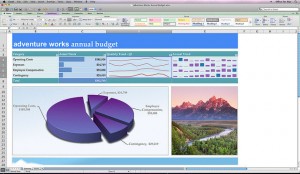
Microsoft Excel
Microsoft Excel

Microsoft Excel® has been widely used around the world as a business application for storing, organizing and manipulating the data of the organization in a systematic format. Nowadays, the use of excel is not only restricted to business uses, but is also used by students and professionals for everything from playing music to training pilots. Despite of availability of other specific use software, people still consider using rows and columns to manage data. This is because the various features and applications offered by excel are familiar, easy to use and readily available.

One easy to use function is the creation of pie charts, graphs and other comparative presentations in Excel. To learn all the key aspects of using excel, you do not need any special training. In this article, we will tell you the step by step procedure to create graphical representations in MS Excel® 2010.

Steps to Create Charts/Graphs in MS Excel®

Step 1 – The first step is to launch Excel on your desktop. Simply click on the Start Menu > All Programs > Microsoft Office> Microsoft Excel. Now to begin your work, open a new spreadsheet. It can be done in three ways: [Read more…] about Job Skills: Excel Spreadsheets


Filed Under: Education, Skills Tagged With: computer skills, Excel

How Much Should You Borrow to Pay for College?

July 22, 2012 by Guest Contributor

Borrowing for College

With stagnant wage levels and increasing costs of living, higher education has become a fact of life for anyone wanting to get ahead. Rising costs of that education are making it harder for parents and students to meet the costs. The past two years, for instance, have seen tuition inflation averaging eight percent, and tuition is virtually guaranteed to increase by three percent every year, if the last two decades are any indication.

Students have some resources available, and a couple of tricks to minimize costs. Private and university scholarships are still a possibility to reduce the costs. The Pell grant can help with undergraduate expenses, but it has not been increased to meet inflation in recent years. Tax credits are a great resource for parents who want to help their children pay for school. Students are increasingly working part-time while attending full-time classes, and they are completing the first two years of core classes at community colleges or on-line.

Even with these options, most students face borrowing to pay for school and living expenses, or putting off their degree programs in favor of full-time employment. How much debt should students feel comfortable with? How much is too much? Are some loans better than others? Finance provider Sallie Mae offers help for those considering student loans.

Borrowing for College
College—401 K 2012 (Flickr.com)

Remember Why You Borrowed

Students often have difficulty making the transition from high school to college. The latter half of senior year for students planning to attend public universities adds to the confusion with frequent parties and road trips. Student loans can easily become a way of maintaining a particular lifestyle, whether it is eating out regularly, living in classy apartments or buying designer clothes. Every dollar of student loans should be directed to the costs of education. When used to cover housing and food, such as during the more hectic final two years, these costs should be minimized as much as possible.

Make Long-term Goals

A way to help control your use of loans is future orientation. What are your plans after school? Do they include buying a new car or house? Maybe you want to start a family or take a vacation to celebrate? Student loan debt will make all these things more difficult, so minimize the debt. [Read more…] about How Much Should You Borrow to Pay for College?

Filed Under: Education, General Tagged With: Borrowing for College, college loans, student loans

Start Your Career as a CNA?

July 4, 2012 by Guest Contributor

Nurses Aide Certification (CNA)

Pursuing a career as a Certified Nurses Aide (a.k.a. Certified Nursing Assistant or CNA) is a quick way to get into the field of nursing and health care. Any individual after completing their high school diploma or GED is eligible to take CNA certification classes and then the certified nurse assistant certification test, which is the first step in getting a job in a medical organization. For CNA certification, it is necessary to enroll in a certified nurse assistant program either at a bricks and mortar institution or in an online certified nursing assistant program. Certified nurses aides are always in demand and the pay scale is good compared to other professions at the same educational level. Along with this, it has career advancement possibilities, as you can become a license practical nurse (LPN) or registered nurse (RN), with additional education.

Certified Nursing Assistant

CNA salaries vary by state, ranging from $15,600 to $31,200. Another important feature of CNA salary is that it is paid on hourly basis. Currently, the highest wage offered is in the state of Alaska, paying $15 per hour. The second best states are California and New York, as both pay $14.5 per hour. CNAs earn the least in the state of Louisiana at $7.5 an hour. You can learn more CNA salaries at the ecnasalary.com  website.

What Certified Nursing Assistants Do

In order to be a good nursing assistant you should have compassion and care for people. CNA’s help provide basic care for patients in hospitals and residents of long-term care facilities, such as nursing homes. They are constantly dealing with sick and elderly patients who may be uncomfortable  and even disagreeable.

Certified Nursing Aides will typically perform the following tasks: [Read more…] about Start Your Career as a CNA?

Filed Under: Careers, Education, Employment Tagged With: CNA, nurses aide, nursing aide certification

The Importance of Building Credit as a Young Adult

June 26, 2012 by Tim McMahon

Building Credit

If you are currently in college, or have recently graduated from college, you know how difficult it is to get a credit card due to a lack of credit history. For those of us who are a little older, this may seem unbelievable, because when we were in school, credit card offers would literally pour out of our mailboxes.

In the past, credit companies would practically beg college students to sign up for low-balance student cards, but thanks to the credit collapse of 2008, that story has drastically changed. It is now nearly impossible to get accepted for a credit card if you have no previous credit history, and this is really hurting a lot of young adults who are trying to get on their feet.

Why You Need to Build Credit

It is a giant “Catch 22” You need a Credit History in order to Build a Credit History

Building Credit Building Credit History—natloans (Flickr.com)You have to have credit history in order to buy or lease a car… buy a home…be considered for a loan…



And when do people usually first need loans? Two to three years after graduating from college. Without a credit card, college students can’t build the credit they need to do these things, and this is why it is important for parents to start helping their kids build their credit starting their freshman year.

How Parents Can Help Build Your Credit

Parents can help their children build credit by opening a joint account with them; with parents as the owners and the child as the authorized user. Have one card designated as the “credit-builder card.” Only use it to buy things like school textbooks or supplies, and pay it off as soon as you make purchases. This will teach your children good credit spending habits and slowly build their responsibility. It will require parents to constantly monitor the card’s use and stay on the child about making payments, but if the student is mindful, there shouldn’t be any problems.

If a parent is concerned that [Read more…] about The Importance of Building Credit as a Young Adult

Filed Under: Education, General, Success Tagged With: building credit, credit, loans, student

Returning to College for a Higher Degree?

June 22, 2012 by Guest Contributor

Moms Returning to College

We all know more education equals higher income and lower levels of unemployment. See: The Difference a Degree Makes in Unemployment Levels

Baby boomer will begin retiring over the next five years increasing job vacancies. This is just in time for moms entering a two-year graduate program now. In some fields, however, it may be best or even necessary to get a few years of job experience before applying for grad school.

Assuming positions are available, a master’s degree will lead to higher income. Just how much higher depends on the field. If you’re a mom considering grad school, it is essential to understand the expectations and use proven strategies to meet the demands of both school and family.

Moms Returning to College for Their Master’s Degree

Moms Returning to College OnlineAlthough Pell grants are still available for undergraduate expenses, graduate school is not covered. Adding up tuition, books, living expenses, and lost income will take the bill anywhere from $30,000 to $200,000 for a two-year program. The good news is that the average grad student can expect this investment to pay for itself in between three and five years with pay increases ranging from 10-300 percent.

Here’s the income difference for a few careers.

  • Elementary teachers can expect an average boost of over $10,000 with a master’s degree.
  • Degrees in accounting gross an average $45,893 and jump to $50,468 with a master’s.
  • IT and computer-related fields are growing, and they can return a huge increase of over $20,000 with graduate degree.
  • With a master’s in the arts and humanities, you can expect an average $7,000 boost in income over your four-year degree income.
  • Getting through grad school with a family is not easy, and you’ll benefit by knowing the demands upfront. [Read more…] about Returning to College for a Higher Degree?

Filed Under: Education Tagged With: Moms Returning to College

The Secret to Making More Money: Stay in School

June 19, 2012 by Guest Contributor

Stay in School=Make More Money

Stay in SchoolIt’s no secret that the more you learn, the more you earn. The United States Department of Education estimates that young adults with a bachelor’s degree earn more than twice as much per year on average than young adults who didn’t graduate from high school. And according the the U.S. Bureau of Labor Statistics the higher your education the less likely you are to be unemployed. See: The Difference a Degree Makes in Unemployment Levels

Learn how much more you can earn each step of the way with a higher degree and decide where you want your road to stop.

High School Diploma or GED

Staying in school long enough to earn your high school diploma will earn you approximately $30,000 per year, which is $9,000 more per year than if you drop out of high school. If you estimate that most people graduate high school when they are around 18 years old and work until they decide to retire around age 62, that calculates out to about $396,000 more over your lifetime just to stay in school until graduation day.


Stay in School 2 More Years- Associate’s Degree

If you decide to continue going to school after graduation but aren’t quite ready to commit yourself to a four-year program, associate’s degrees offer the opportunity to get out into the working world sooner while still having an advanced degree. Associate’s programs are great for people who want to go into technical fields or start at lower-ranking positions and work their way up. The average annual salary for someone with an associate’s degree is $36,000, indicating a jump of $6,000 per year over high school graduates and $15,000 more than students who didn’t earn their diplomas.

But what if you stay in school 4 more years?

[Read more…] about The Secret to Making More Money: Stay in School

Filed Under: Education, Employment, Success Tagged With: earn more, education, stay in school

How to Get a Career Instead of Just a Job

June 18, 2012 by Guest Contributor

The Key to Success in Jobs

I once met a young man who was complaining about change and this is what I told him.

” The only thing Constant in Life is change.
Those who adapt quickest thrive…
Those who adapt slowly survive…
Those who don’t atapt at all…
are relegated to the lowest levels of existence…
Poverty and misery.
The key to success is to adapt quickly…
it will put you at the head of the pack.”

In this article we will look at how change affects your job prospects and what you can do about it.

Tim McMahon~ editor

How to Get a Career Instead of Just a Job


Ever since 2008, government officials have been scrambling to put the economy back together, and it’s hard for someone without work to find a place for themselves within the chaos. The world has changed; products that were once the hallmark of American civilization are no longer in demand, and if they are, they’re shipped from another country. We’ve become a mostly service-based economy with millions of people that need jobs and few openings for them to fill.

Despite this, it’s a time of unparalleled opportunity. New niches are being created, new technologies are being introduced, and it’s never been easier to educate yourself, whether it’s through school or self-study, or starting your own business. Unskilled labor is disappearing, but anyone that can adapt has a bright future ahead of them.

[Read more…] about How to Get a Career Instead of Just a Job

Filed Under: Education, Employment, Experience, Success Tagged With: career, Get a Job, success

Paying for College: Student Loan Tips for the Newbie College Grad

June 7, 2012 by Tim McMahon

Student Loan Tips

Graduating from college is one of those milestone moments. You leave your college bubble and pseudo adult life, only to enter “real time” adulthood. While graduation means graduation parties, graduation gifts, and no more late night study sessions or final exams, it also means a nine to five job, “real world” bills, and student debt. Graduates today are facing hard times. With a steady and astounding unemployment rate, a competitive job market, and mounting student debt, it’s not hard to imagine new grad life being less than glamorous. While this transition is always going to be a challenge, there are several things that new or soon-to-be grads can do to prepare for real life. Use these tips to carefully manage your student loan debt and reduce some of the stress in your first year as a college graduate. Here are 3 Student Loan Tips:

Student Loan Tip #1– Prepay Your Loan

Mortarboard, SooMee turning tassel
Student Loans Soon, SooMee turning tassel—quinn anya (Flickr.com)

With harsh times afoot, many individuals make efforts to lower their monthly student-loan payments from the beginning. This can be a very enticing thing to do. You can consolidate your loan or you can extend your repayment of the loan. While these options offer immediate relief, they tend to make things more challenging over time. Extending your repayment period means that you make more payments over a longer period of time. Doing this means that you end up paying more money in interest on the loans overall. Sure, a loan extension may be necessary at certain times and in specific circumstances, but, if at all possible, it is best to hold off on extending the loan period for times of emergency.

Student Loan Tip #2– Set Reachable Goals

It’s important to set goals for yourself when it comes to loan repayment. Student loans are difficult because they are dropped on you before you can even find your footing in the world of true adulthood. Sit down and set up some basic, attainable goals for yourself. Ideally, you should attempt to make the suggested monthly payment plus a little bit extra whenever is possible on your loan. But, of course, sometimes (particularly in the beginning) this just isn’t going to be possible. Look at your finances and decide what type of goal is reachable for your repayment. Once you figure that out, stick with it. When the time comes that you think you can pay a little extra on top of your usual payments, reevaluate your goals. Even 10 dollars extra a month can make a huge difference in interest charges. Generally speaking, the repayment period for a student loan is 10 years. This is a good goal to start with, but take a look at your specific situation and see what’s best for you. [Read more…] about Paying for College: Student Loan Tips for the Newbie College Grad

Filed Under: Education Tagged With: debt, Student Loan Tips, student loans

Great Jobs for Those with a College Degree

May 30, 2012 by Tim McMahon

College Degrees Lead to Good Jobs

Ask anyone who is carrying hundreds of thousands of dollars in college loans and they will tell you that a degree is an expensive investment. And like any investment you should be concerned with ROI (Return On Investment) or the value you get back for not only the money you invest in your education but on your time investment as well.

College degree, DSC 0960
College degree,  Will Folsom(Flickr.com)

Research proves that those with college degrees are higher earners and suffer less unemployment on average than those with only a high school degree. Since a college degree is a smart investment, why not choose a degree program that promises a strong return?

The following jobs for college grads tend to be in high demand and have higher wages.

Human Resources

Working in human resources means dealing with hiring, firing, and other administrative management of the work force. No matter what the size or the purpose of a company, if there is more than one employee, there is a need for a human resource administrator. According to the US department of labor, the estimated rate of growth for these positions is over 20 percent for the next six years. With salaries averaging over $100,000, a college degree based in human resources is a safe bet for a strong return.

College Degrees Preparing You for a Human Resources Career

Many colleges offer a Bachelor’s degree in Human Resources Management and although there are also Associates degrees available, many experts agree that an Associates degree is no longer enough to get anything less than the lowest level human resources positions.

[Read more…] about Great Jobs for Those with a College Degree

Filed Under: Education, Employment Tagged With: college degrees, education, human resources, information technology, jobs, nursing

How to Finance an MBA

May 27, 2012 by Guest Contributor

Financing an MBA

If you’ve decided an MBA is the best option to further your career, it’s time to get smart about paying for it. A two-year MBA program at the most prestigious schools can cost $100,000 or more for tuition, books, and living expenses. This doesn’t even include the cost of lost wages. Even schools with less name recognition are going to cost you tens of thousands of dollars.

Fortunately, there is plenty of financing help available for MBA candidates. Knowing your options is the first step to researching in-depth solutions for financing your MBA ambitions.

How to Finance an MBA- Using Student Loans

How to Finance an MBA
No one enjoys the prospect of going into debt, but there are few better reasons to do so than enhancing your earning power with education credentials. Federal loans are typically managed by B-schools and only require you to fill out a FAFSA. These loans carry a fixed interest rate, and repayment is made as painless as possible. Paying interest while still in school is generally a good way to keep costs down and federal loans also extend a grace period and the opportunity for income-based repayment should you hit a bad patch.

Private loans take more effort to manage, but they can be better in the long run. Your credit history will be most important here. Repayment is not as flexible, and interest rates can be variable. Variable interest is definitely a bonus in a bad economy.

[Read more…] about How to Finance an MBA

Filed Under: Benefits, Education Tagged With: Business School, Finance MBA, How to Finance an MBA

  • « Go to Previous Page
  • Page 1
  • Interim pages omitted …
  • Page 5
  • Page 6
  • Page 7
  • Page 8
  • Go to Next Page »

Primary Sidebar

Rate Any Stock In Seconds

Get a detailed stock report showing its true value, safety score, and ideal timing to buy. Plus, receive a color coded Buy, Sell, or Hold recommendation.

Get Your Free Stock Analysis Here.

Recent Posts

  • March Employment Report for February 2026
  • February Employment Report for January 2026
  • Unemployment Report for December 2025
  • Unemployment Report for Nov. 2025
  • Delayed September 2025 Unemployment Report Released

Search Site

Resources

  • Bureau of Labor Statistics Current Population Survey Monthly survey of households conducted by the Bureau of Census for BLS. It provides data on the labor force, employment, unemployment, etc.
  • Capital Professional Services Providing web design and development and Internet marketing services
  • Elliott Wave University Using the Elliott Wave Principle to improve investment performance
  • Financial Trend Forecaster Featuring Moore Inflation Predictor, NYSE Rate of Change and NASDAQ Rate of change
  • InflationData.com Inflation calculators, databases, etc.
  • Intergalactic Web Designers Web design and development services

Articles by Category

Articles by Date

Disclaimer

At UnemploymentData.com we are not registered investment advisors and do not provide any individualized advice. Past performance is not necessarily indicative of future performance and future accuracy and profitable results cannot be guaranteed.

Privacy & Terms of Use

Privacy Statement & Terms of Use

Do Not Sell My Information

Copyright © 2026 · News Pro on Capital Professional Services, LLC. All rights reserved · Log in