
Jack Welch on Twitter: Unbelievable Jobs Numbers
Unemployment Numbers “Surprisingly Good”-
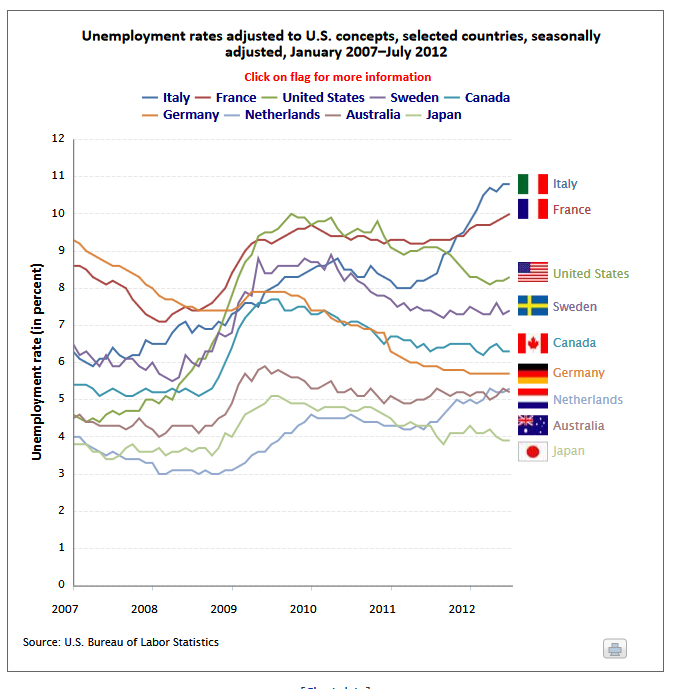
On Friday, October 5th, just two days after the first Presidential debate the Bureau of Labor Statistics released the unemployment data for September, which were “surprisingly good”. The experts were not expecting such a large drop. The Seasonally adjusted unemployment rate was 8.3% in July and had fallen to 8.1% in August and then the unemployment numbers for September came in at a shocking 7.8%.
Upon hearing these numbers, Jack Welch sent a Tweet from his Twitter account that has enraged Democrats. He said,
Jack Welch
- @jack_welch
Unbelievable jobs numbers..these Chicago guys will do anything..can’t debate so change numbers.
Jack Welch has an amazing resume, the former CEO of General Electric, a best-selling author, a lecturer at the MIT Sloan School of Management and the founder of the Jack Welch Management Institute, etc.
Media Pounces on Jack Welch for Twitter Comments
But of course, that didn’t stop the Media from pouncing all over him. Huffington Post called his Tweet “Demented” and of course, the White House dismissed him as “ludicrous”.
“That’s a ludicrous comment. No serious person believes that the Bureau of Labor Statistics manipulates its statistics,” said Alan Krueger, chairman of the White House Council of Economic Advisers.
I don’t know where Mr. Krueger has been over the last 20 years, but John Williams of Shadowstats.com has made quite a name for himself disbelieving BLS numbers for some time now. And we have published several articles about how the Unemployment numbers don’t match up with the Employment numbers. See: Employment vs. Unemployment and Is the Government Fudging Unemployment Numbers? We published both of these articles long before the Presidential debate and Jack Welch’s Tweet.
As a matter of fact, James Dale Davidson founder of the National Taxpayers Union and author of Blood in the Streets, The Sovereign Individual, and most recently Brazil Is the New America: How Brazil Offers Upward Mobility in a Collapsing World wrote many years ago that he believed that Bill Clinton was fudging BLS numbers. So accusations of BLS fudging are nothing new.
As a matter of fact, it might be [Read more…] about Was Jack Welch Right on Twitter? Are Unemployment Numbers “Unbelievable”?

 Starting a Business- Harder Now
 A challenge for many college students is gaining experience. Training new employees, is expensive so companies often prefer to hire people who have the work
 Young Professionals: