
The U.S. Bureau of Labor Statistics data regarding the Unemployment situation in October was not released on November 7th as scheduled due to the continuing Federal Government shutdown.
Although AI automation is improving company profitability, it is also reducing the need for lower-level employees as Senior employees become more productive by using AI. This is squeezing younger employees. Back in May, Microsoft announced it would cut nearly 4% of its workforce, particularly in sales (~6,000 jobs), as it realigns around heavy AI investments. Reuters
Not all the news is bad…
Amazon will cut about 14,000 corporate jobs as the online retail giant ramps up spending on artificial intelligence while cutting costs elsewhere… However, simultaneously, it is hiring 250,000 seasonal workers, the same as last year’s holiday season. AP News
“In 2023, IBM made headlines with the announcement of nearly 8,000 layoffs, primarily from support roles such as Human Resources. The goal? To replace these workers with artificial intelligence (AI), automating repetitive tasks and increasing efficiency. However, just months later, the company found itself doing something it hadn’t anticipated: rehiring many of those workers… despite these significant savings, IBM’s workforce actually grew after the layoffs. Arvind Krishna, the CEO, explained to the Wall Street Journal that while AI had helped streamline operations, it also allowed the company to reinvest in other areas. Rather than eliminating jobs permanently, IBM found that the freed-up resources were being directed towards higher-value roles.” GlassAlmanac
Meta Platforms is cutting roughly 600 artificial intelligence jobs… even as it continues to hire more workers for its superintelligence lab. Intellizence
Interestingly, more than half of the companies that perform layoffs citing automation/AI now say they regret the decision. TechRepublic+1
So, although AI reducing jobs is creating headlines, the truth may be entirely different. Throughout history, ever since the Luddite Weavers in the early 1800s, workers have feared the loss of jobs due to technological advances. But the truth is that after the initial displacements, technology has created more (and higher-paying) jobs than it has destroyed. Of course, the displaced workers suffer initially and retraining is often required. But those able to adapt to the changes are often better off in the end, while those unable to adapt suffer.
Many years ago, I said, “The only thing constant in life is change. Those who adapt quickest thrive, those who adapt slowly survive, those who don’t adapt at all are relegated to the lowest levels of existence, poverty, and misery. The key to success is to adapt quickly… it will put you at the head of the pack.” – Tim McMahon
Based on the alternative data from ADP we see:
According to ADP:
Private employers added 42,000 jobs in October.
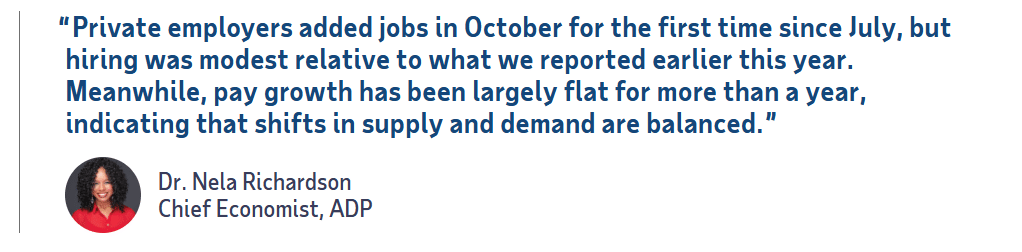
ADP provides an independent (non-government) estimate of private-sector employment and pay, based on data derived from ADP client payrolls. According to ADP®, In collaboration with Stanford Digital Economy Lab. The numbers are released a few days before the BLS numbers and are often quite different.
Source: ADP®
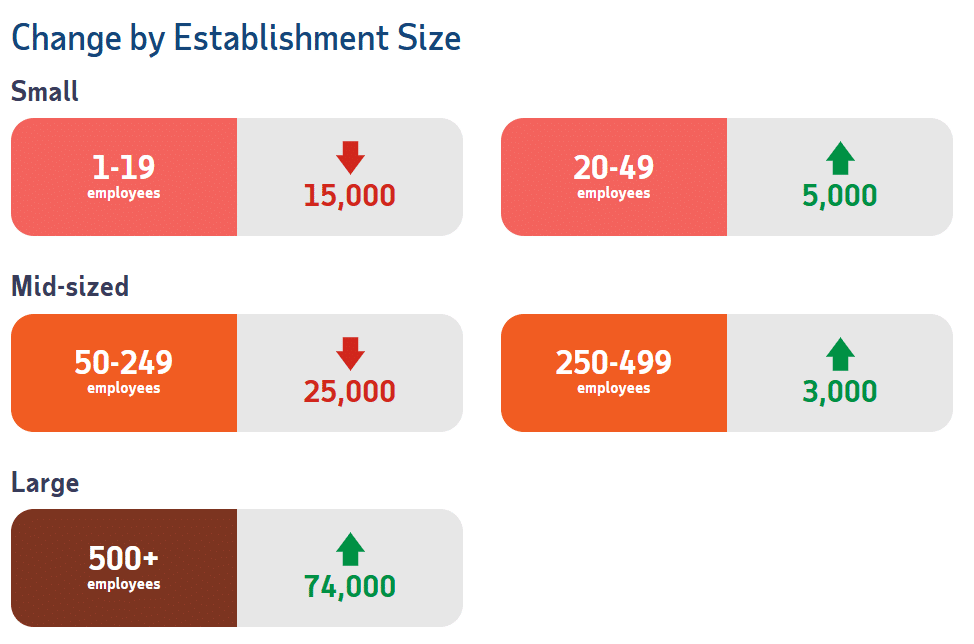
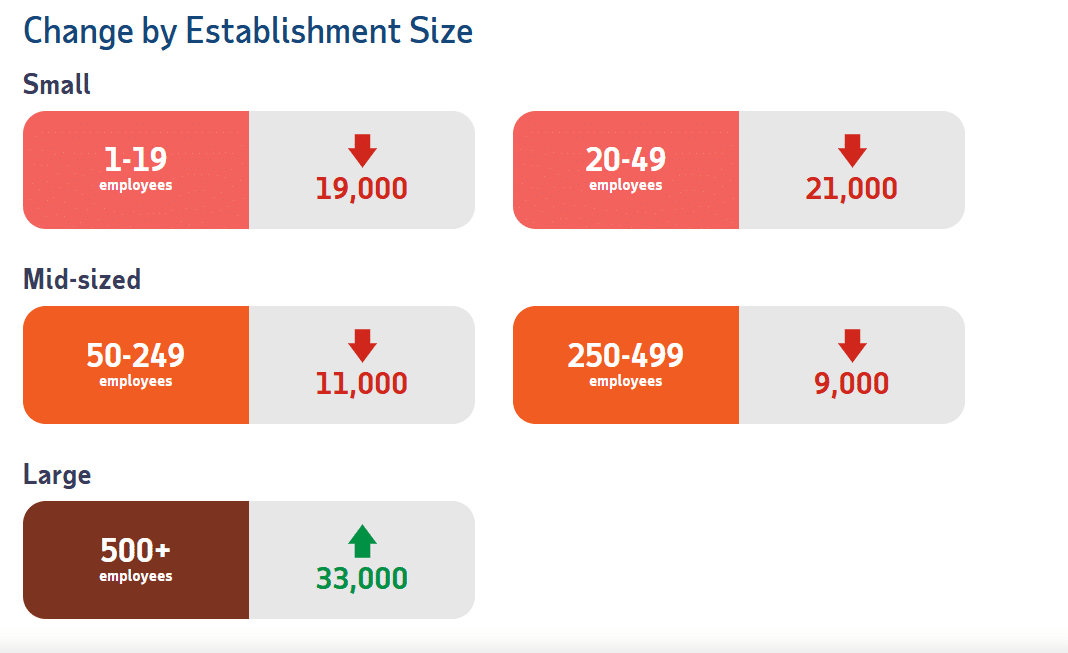
ADP Private Employment by Establishment Size
Small and mid-sized companies shed employees in October 2025. However, larger companies took up some of the slack by adding employees.
October: However, this showed broader growth than in September.
September:
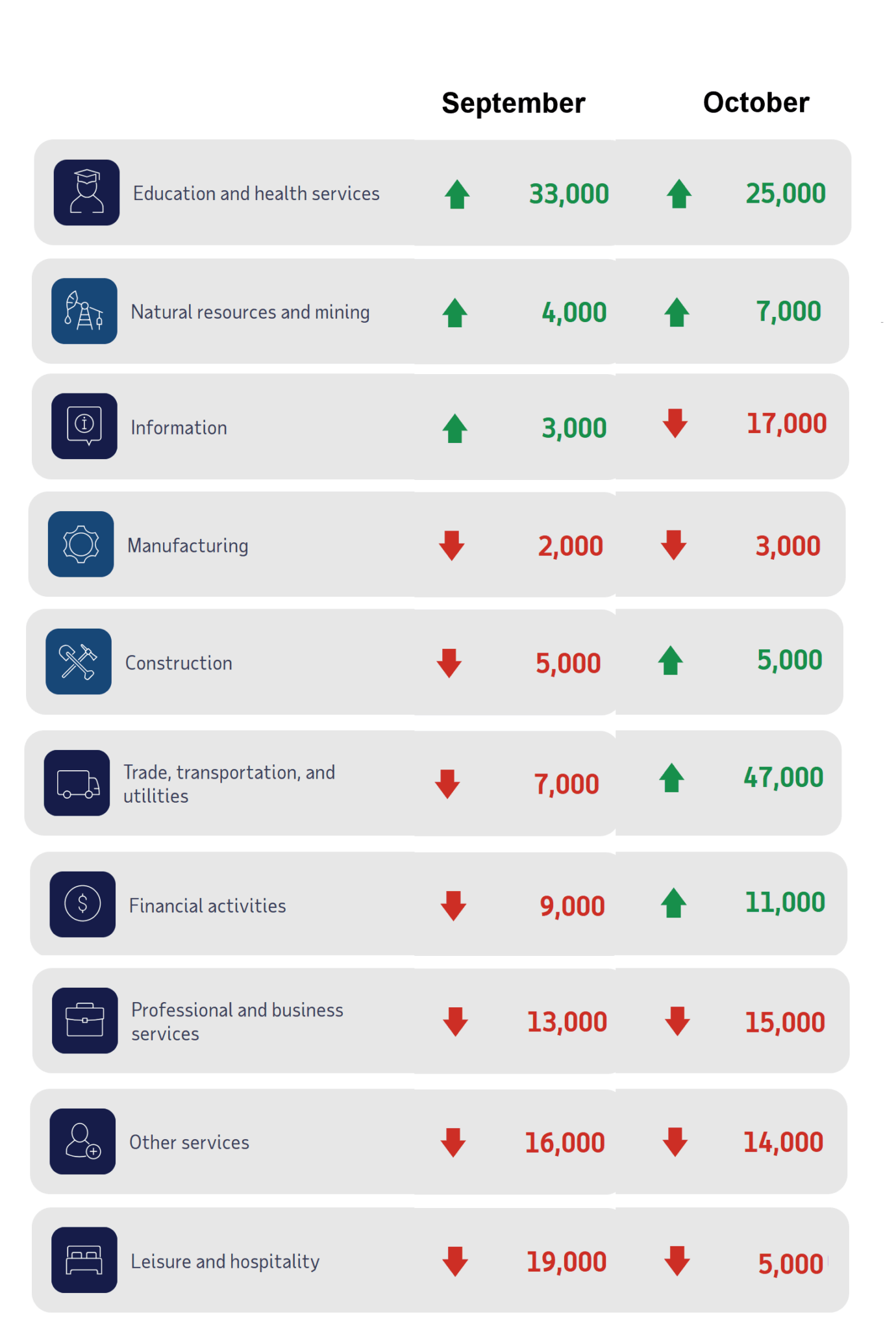
ADP Job Gainers / Losers
Comparing October to September, we see a major improvement in Trade, Transportation, and Utilities. We also see two other categories that had losses in September but gained in October, namely Construction and Finance. On the other hand, Information gained slightly in September but declined by 17,000 in October. Professional Service lost slightly more in October than in September, while Other Services was exactly the opposite. Leisure and Hospitality lost significantly fewer jobs in October than in September.
ADP Pay Insights
Pay growth was unchanged in October
Year-over-year pay growth was flat in October from the month prior, at 4.5 percent for job-stayers and 6.7 percent for job-changers.
The National Median Annual Pay for Job Stayers in September and October was $61,000.
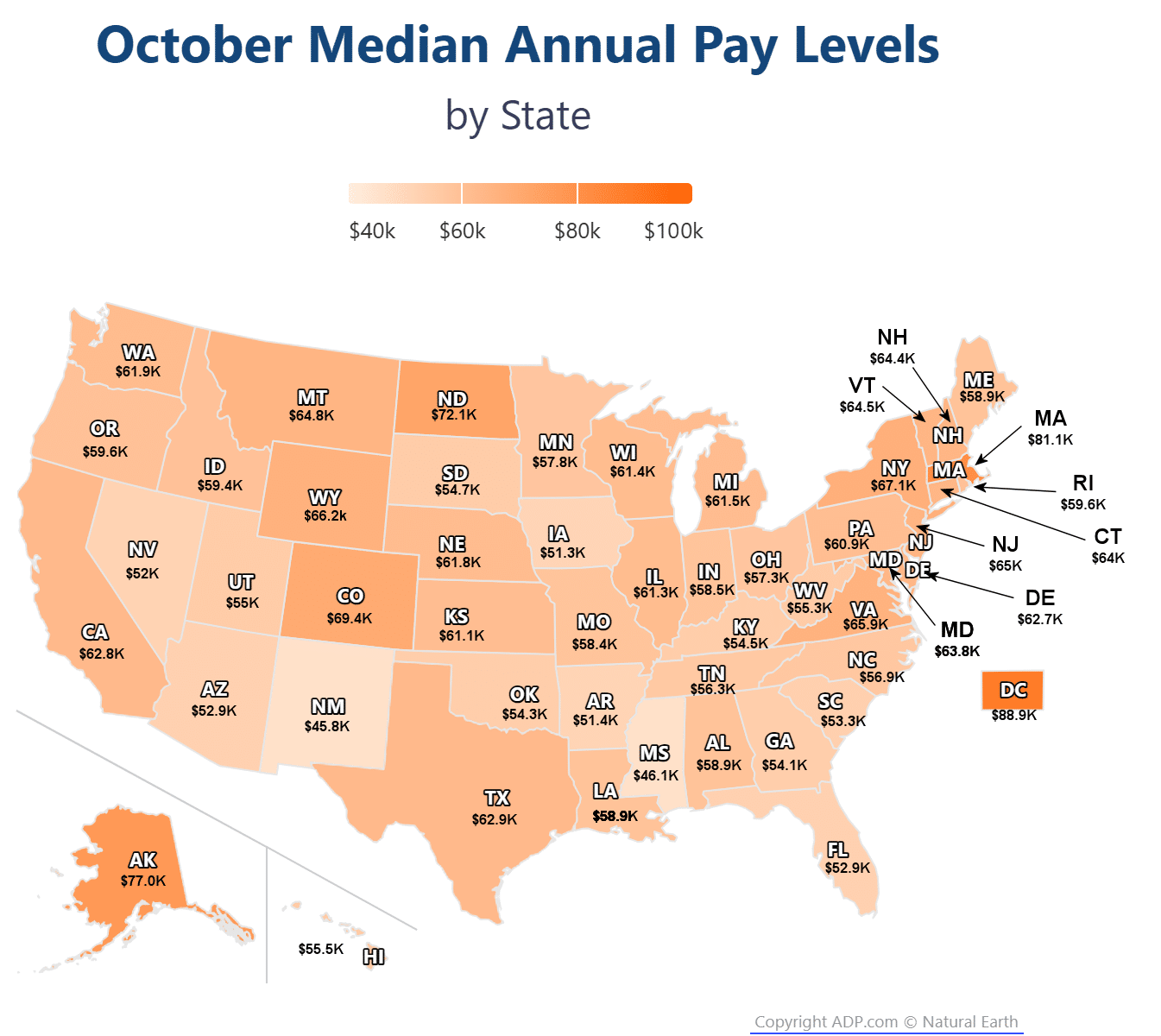
Source: ADP
Read more on UnemploymentData.com.
- Blue-Collar Wages Surge in 2025
- Does Raising The Minimum Wage Make A Substantial Difference?
- Would More Jobs Help Social Security?
From Financial Trend Forecaster
- Moore Inflation Predictor
- NYSE ROC
- NASDAQ ROC
- ETH and BTC Buy Signal
- Government Shutdown 2025: What It Means for You and the Markets
- Fed’s First Rate Cut in Nine Months
- Pirates of the Crypto-ribbean
- Overcoming Power Grid Demand Problems- Then and Now
- Is the Crypto Pull-Back Serious?
- The Truth About AI and Electricity Capacity
- This Forecasting Tool Nailed the S&P Turns
- Warren Buffett isn’t buying — and that says a lot.
- Debt Ceiling Drama
- Stock Market Signal: Only 3 Times in 47 Years!
- Tesla’s Troubles — Is it Musk or is it More?
From OptioMoney
- What is a “Haircut” in Financial Terminology
- How To Protect Your Wallet When You’re Just Starting Out
- Consumer Culture Contrasting Spending Habits in the US and Europe
- Financial Considerations When Moving to Florida
From Your Family Finances
- YFF has a new editor, so we won’t be posting new links anymore.
